
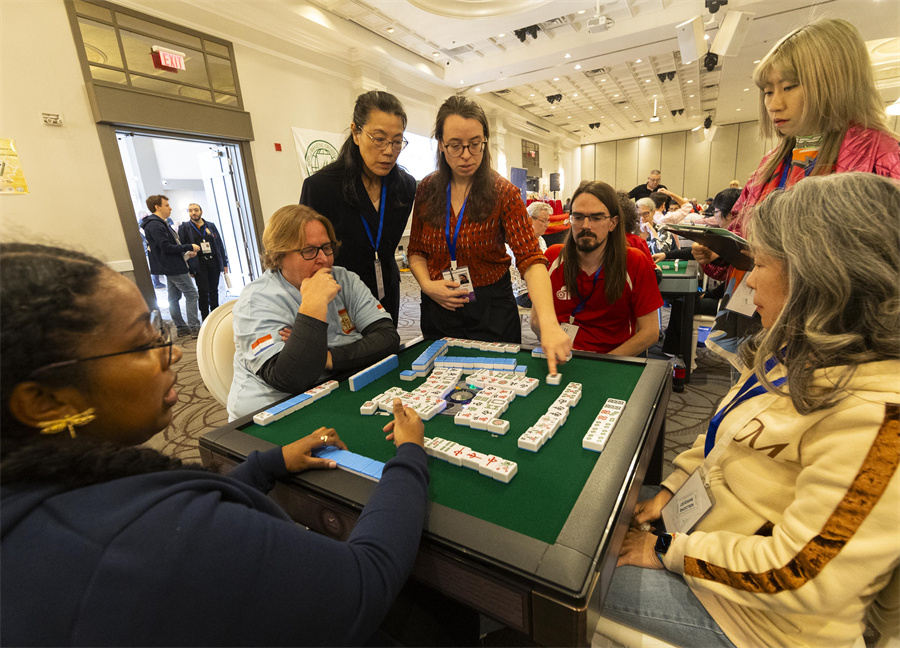
*Two judges (center) review the result of a game during the 7th World Mahjong Championship in Mississauga, Canada, on Oct 12. [Photo/Xinhua]
Imagine a hushed room in Macau, the air thick with tension as 200 players from 30 countries clutch their tiles like poker pros holding a royal flush. A judge in a crisp blazer peers over a competitor’s shoulder, scrutinizing a flawless “Heavenly Hand” worth 88 points.
This is the World Series of Mahjong, where a single misplayed tile can cost you $50,000. How did a 19th-century Chinese pastime become a cutthroat international sport?
Let’s shuffle through Mahjong’s wild journey from village courtyards to ESPN-worthy championships.
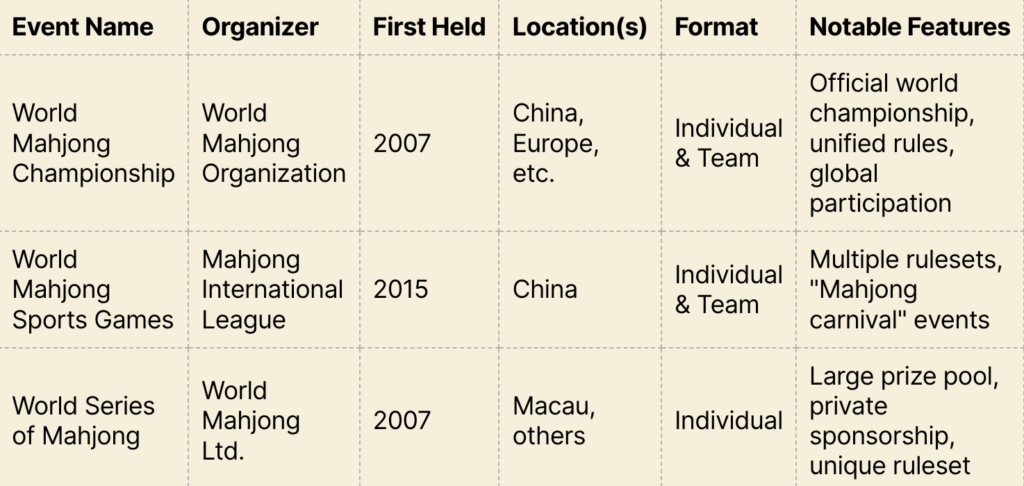
The Big Three: Where Mahjong Champions Are Made
Forget the World Cup—these are the tournaments where strategy meets sweat:
Sure! Here’s the table content written out:
From Riverboats to Prime Time: Mahjong’s Glow-Up
19th Century Shanghai:
Imagine smoke-filled tea houses where silk-robed merchants placed bets worth entire shipments of tea. This was Mahjong’s first competitive era—no rules, just ruthless intuition.
Fast-forward to 1998:
China’s government drops a bombshell: Mahjong is now an official sport. Cue eye rolls from aunties everywhere. But this move birthed standardized rules and pro leagues. My cousin Ling, a former street vendor, now coaches China’s national team. “We train like athletes,” she says. “Six hours daily, nutrition plans, even meditation for focus.”
The American Twist:
In 1937, a group of Jewish women in New York rebelled against stuffy men’s clubs by creating the National Mah-jongg League. Their rulebook became gospel for generations. “It wasn’t just a game,” says 94-year-old Ruth Cohen, a league legend. “It was how we built businesses, raised families, survived wars.”
Why Your Next Vacation Might Include a Mahjong Visa
Unexpected hotspots:
- Hungary: Hosted the 2019 European Championship. Why? Turns out, Mahjong’s tile-matching soothes the same brain zones that produce math geniuses.
- Kenya: Nairobi’s youth leagues use recycled plastic tiles. “We play in markets between selling mangoes,” says 16-year-old prodigy Wanjiku. “Someday I’ll beat the Chinese!”
- Brazil: Rio’s favelas host beach Mahjong tournaments where samba rhythms set the timer.
The Future: Mahjong in 2030
Imagine AI referees, holographic tiles, and teenage influencers streaming matches to millions. But at its heart? Still, that magical click-clack rhythm connects a Finnish grandma, a Tokyo salaryman, and a Nairobi teen through four simple words: “I call that tile.”
So next time someone dismisses Mahjong as “just a game,” smile knowingly. You’re part of a revolution where cultural heritage meets eSports glory, and every shuffled tile writes history.
Here you can find more information on the European Mahjong Association LINK